

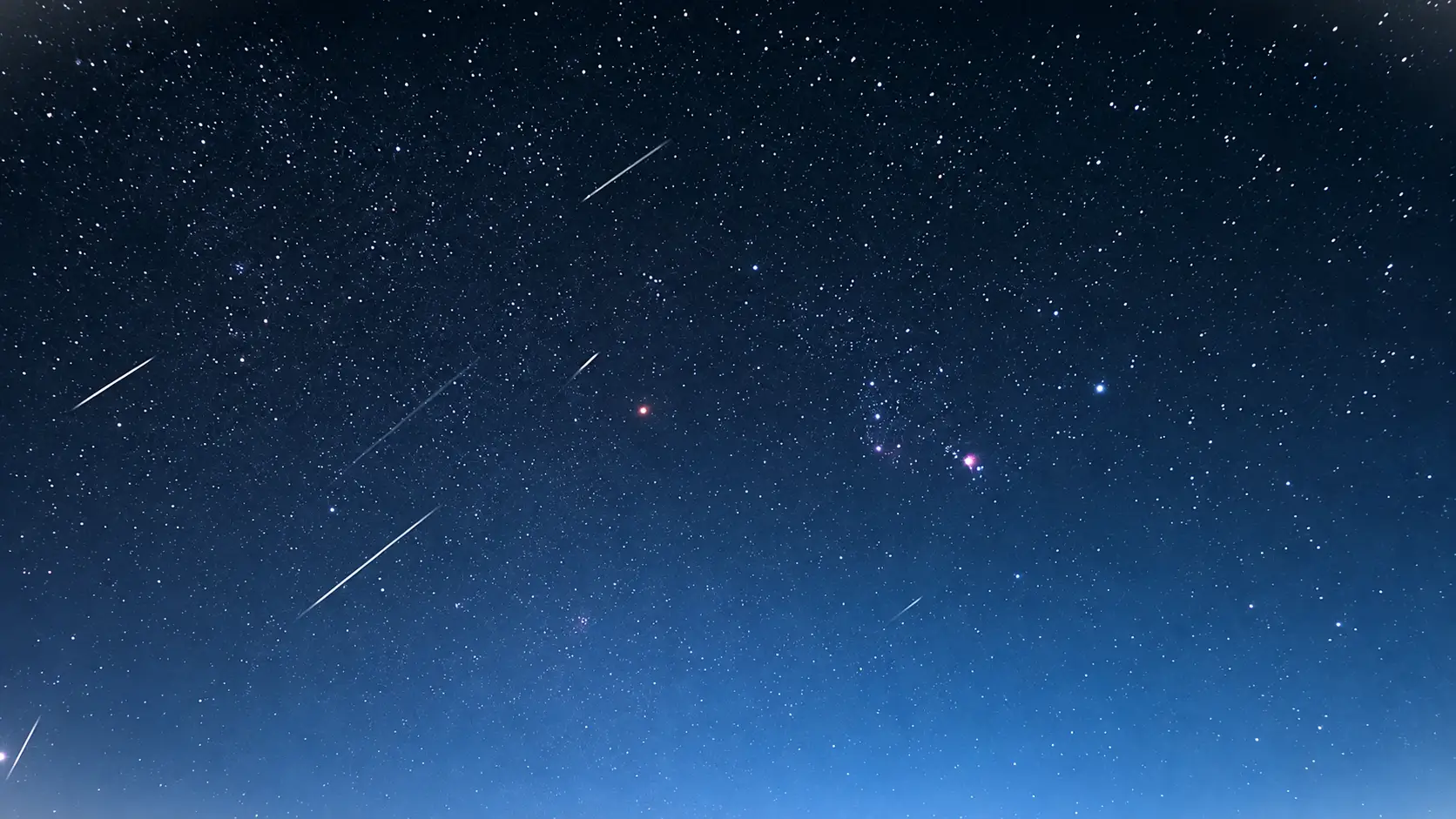
The Orionid meteor shower will peak on the night of October 21 – 22, giving skywatchers in India an opportunity to spot shooting stars before dawn. However, NASA warns that a bright waxing gibbous Moon will obscure some of the fainter meteors, making the hours after moonset the better viewing window.
The annual shower is already active. For Indian viewers planning an observation session, the key is to find clear, dark skies and check local moonset times before heading outside.
Orionid Meteor Shower 2026: Key Details
| Detail | What to know |
|---|---|
| Peak night | October 21 into October 22, 2026 |
| Active period | October 2 – November 7 |
| Best viewing window | Before dawn, preferably after moonset |
| Typical peak activity | Around 10 – 20 meteors per hour under favourable dark skies |
| Parent comet | 1P/Halley, commonly called Halley’s Comet |
| Main obstacle this year | Bright moonlight |
NASA and the American Meteor Society list October 21 – 22 as the peak night. The hourly figure describes favourable observing conditions; it is not a guaranteed count for every location.
When Is the Best Time to Watch the Orionids in India?
The early morning of October 22 is the main viewing opportunity to plan around. NASA recommends watching before dawn after the Moon has set, when the sky becomes darker and faint meteors are easier to detect.
There is no single clock time that works equally well across India. Moonset and morning twilight vary by location, so viewers should check their city’s timings rather than rely on a nationwide peak time.
The useful window ends as dawn brightens the sky. Timeanddate recommends the final hour or two before dawn around the peak, with particular attention to moonset in 2026.
How Many Meteors Will Be Visible?
The Orionids are a moderate meteor shower. Although normal peak activity can reach around 10 – 20 meteors per hour under favourable conditions, moonlight and artificial lighting can substantially reduce what observers actually see. The American Meteor Society expects significant lunar interference while the Moon remains above the horizon this year.
NASA’s October skywatching guidance gives a more modest example: observers in suburban areas with some surrounding light may see approximately three to six meteors per hour. That is general guidance, rather than a specific forecast for Indian cities.
Expect occasional streaks separated by quiet intervals, rather than a continuous display.
What Causes the Orionid Meteor Shower?
The Orionids occur when Earth passes through debris left behind by Halley’s Comet. Tiny particles enter Earth’s atmosphere at approximately 66 kilometres per second, producing bright streaks as they disintegrate.
Some Orionids leave glowing trails that remain visible after the meteor disappears. Occasionally, a particularly bright meteor can appear as a fireball.
Watching the shower does not mean Halley’s Comet itself is returning this October. The comet last visited the inner solar system in 1986 and is expected to return in 2061; the annual meteors come from material it previously shed.
Where Should You Look?
The meteors appear to radiate from near the constellation Orion, which gives the shower its name. However, they can cross large sections of the sky.
You do not need to stare directly at Orion. NASA recommends taking in a broad view; meteors seen farther from the radiant can appear longer.
How to Watch the Orionids From India
For the best chance of spotting meteors:
- Choose a dark location away from streetlights and bright buildings.
- Check cloud cover and local moonset before leaving.
- Allow approximately 20 – 30 minutes for your eyes to adjust.
- Avoid checking a bright phone screen.
- Use a reclining chair or blanket to watch comfortably.
- Keep a wide view of the sky and allow plenty of time.
Clear skies, darkness and patience matter more than finding a famous stargazing destination. Timeanddate also advises dressing for the conditions when spending an extended period outdoors.
Can You Watch on Another Night?
Yes. The peak is not the shower’s only opportunity. The American Meteor Society describes the Orionids as having a broad maximum that can extend across several nights. If October 21 – 22 is cloudy, a nearby clear morning may still offer sightings, although activity will vary.
For viewers in India, the practical priority is a clear, dark interval before dawn. This year’s Moon will make observing harder, but brighter Orionids may still reward a patient watch.